
On this site, we intend to do a complete review of nickel rolling and its application in various industries. Stay with us.
Nickel rolling
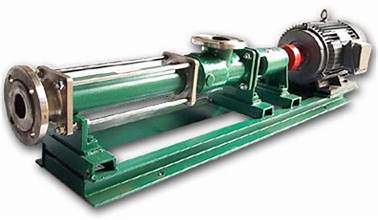
Rolling is called the method of shaping materials with waxing ability. Some materials, polymers and metals have the ability to wax at low temperatures. But sometimes, in some materials, it is not possible to wax and shape at low temperature, in which case hot rolling is used. The rolling process means changing the shape of the material by passing through the rollers, this process is one of the most practical methods of shaping materials. Many products such as corners, beams, etc. are produced by this process.
rolling process
In general, rolling is changing the shape of the billet or sheet into the desired shape, which results in the production of a special sheet or wire. Wires are produced in different types such as white (galvanized) wire, black wire, rabbit wire, armature wire, molding wire, etc., each of these products has its own use in different industries.
After the rolling process is finished and the desired change has taken place, the final product is cut by the desired devices and finally, after control and packaging, they are stored in the warehouse to be sent to the market. Rolling machines are used for heating and cooling of all kinds of metals and alloys in different sizes.
Rolling types
Rolling is generally divided into hot rolling and cold rolling, and in hot rolling, the plasticity of materials is very high. As a result of crystallization, the strength of the material decreases in a clear way, so the force required for rolling large parts is also reduced.
Hot rolled:
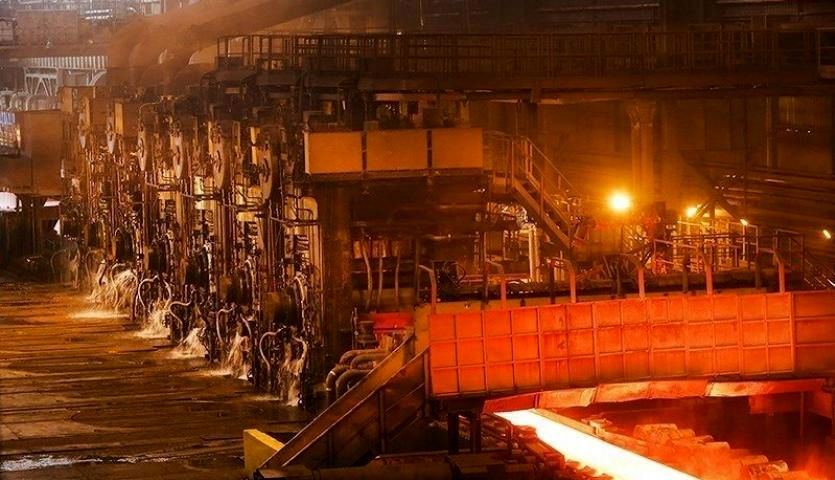
In this method, temperature control and regulation is very important. The temperature must be completely uniform and higher than the crystallization temperature, because if the temperature is lower than the crystallization temperature, it will make the plasticity of the steel very hard. Ingots are used for hot rolling. In this case, the billet is placed inside the machine and with heat, the material turns into a roll.
The produced rolls are kept at the same temperature for some time and then passed through the rollers. After the piece cools and shrinks, the final product is ready. This rolling is mostly used for the production of rebar, making rails, iron, etc.
The advantages of hot rolling are:
- Hot rolling products have high formability
- In this operation, the parts are cooled to a suitable temperature, so it does not become dry and hard
- The products produced by this method require less payment, in this case they are cheaper
Cold rolling
Cold rolling is basically the same as hot rolling, except that it has more processing. To produce products with exact size and dimensions, this method is very widely used. In this method, due to the creation of precise dimensions, the rolling temperature must be lower than the crystallization temperature, therefore the final product has a higher surface quality. In cold rolling, mechanical stress is used instead of heat to change the shape of the metal.
The advantages of cold rolling are:
- The final product has exact tolerance
- The final product looks more beautiful
- Shipping is very easy in this way
- The final product has higher resistance and tolerance
The rolling machine includes rack, roller, bearing and bearing housing parts. The rolling machine consists of two cylindrical rollers that move in opposite directions by the power of the motor.
What is the element nickel?
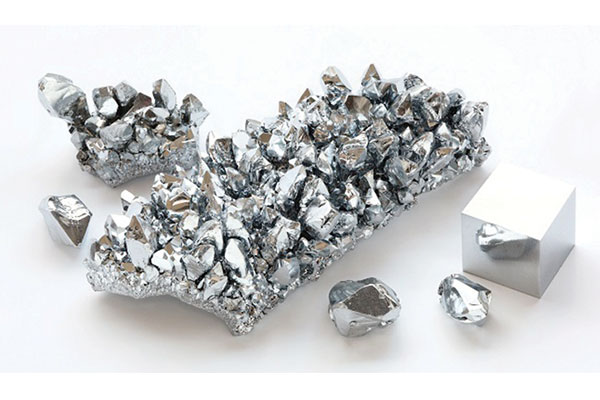
Nickel with chemical symbol NI and atomic number 28 is in group VII of the periodic table. This element has many features, including crystalline and cubic structure, white and shiny silver color, malleability, high flexibility, electrical current conductor, etc. This element is a subgroup of iron and cobalt elements, for this reason, it is very similar to these two elements in terms of chemical activity and magnetic properties.
Nickel element has many applications in nature and various industries. This element is the fifth element on earth and is widely formed in the core and crust of the earth. The largest nickel producing countries in the world are Russia, Australia and Canada.
Properties of nickel
The nickel element has many properties and characteristics, which include:
- High melting point
- Corrosion resistance
- Resistant to oxidation
- Hammerability
- Ease of use in metal plating
- Catalytic properties
- Recyclability
History of the element nickel
The element nickel was first discovered in 1751 by a Swedish chemist. In the 19th century, this element became very important due to its use in electroplating and making alloys such as nickel silver. The reason why it was named as nickel silver was only because of its silver color and there was no silver in it.
Years later, in 1857, America began to make coins with copper and nickel alloy for the first time. But the coins minted by America were not made of pure nickel. Much later, for the first time in 1881, pure nickel was used to make coins in Switzerland.
Later, in the 20th century, stainless steels were made of nickel because the nickel element has a very high resistance to corrosion and also a high resistance to high temperatures. Years later, the same characteristics made nickel element to be used in the construction of jet engines.
Application of nickel
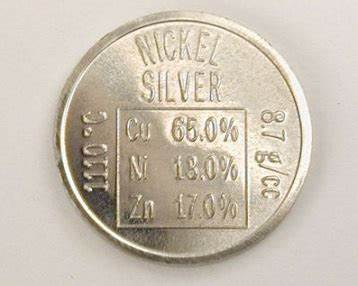
Nickel element is used in many industries, such as:
- Steel production industries
- mintage
- Battery manufacturing industry
- Chrome plating industries
- Marine industries
- Shipbuilding industries
- Sea salt water desalination industry
- Casting industry
- sheet products
- Making kitchen appliances
- Making kitchen appliances
- The automotive industry
- Building trains
- Making special alloys
- Catalyst for hydrogenation of vegetable oils
- Making smart wires
- Making memory alloys in robots
- Plating industries
- Making springs and paper clips and…