
Perak soda, which is discussed in this article, is also known as liquid soda, solid soda, and caustic soda. Stay with us to learn more about this material.
What is perk interest?
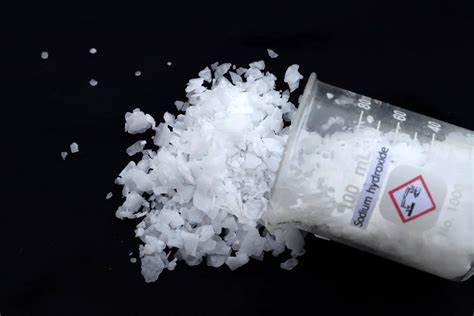
Sodium hydroxide, also known as caustic soda and lemon, is an inorganic compound with NaOH as the caustic soda formula. It is a white solid ionic compound consisting of hydroxide anions OH- and sodium cations Na+.
Baking soda is a highly caustic base and alkali that breaks down proteins at normal ambient temperatures and can severely burn chemical burns. This substance easily absorbs carbon dioxide and air humidity and is very soluble in water. Baking soda forms a series of hydrates such as NaOH·nH2O.
Note: NaOH·H2O monohydrate crystallizes in water solutions between 12.3 and 61.8 degrees Celsius. Commercially available sodium hydroxide is often the monohydrate of this, and published data refer to it rather than an anhydrous compound, which is often one of the simplest hydroxides to represent, alongside the acidic hydrochloric acid and neutral water. The pH scale is used.
Preparation of perk interest
Sodium hydroxide or baking soda can be prepared by three consecutive methods, these three methods are:
- Kastner-Kellner process
- Nelson diaphragm cell
- The Ludwig process
Now we will briefly talk about each process, stay tuned.
Kastner-Kellner process
In the Kästner-Köllner process, salt water solution is electrolyzed to obtain sodium hydroxide.
Kastner-Kellner cell
It is a rectangular steel tank where Abnite is placed inside the tank. Titanium acts as an anode and a layer of mercury at the bottom of the tank acts as a cathode.
Ionization of salt water solution is done according to the following reaction:
2NaCl → 2Na+ + 2Cl-
When the salt water solution comes in contact with an electric current, ionization takes place. As a result, both positive and negative ions move towards the electrodes. And sodium ions are deposited in the mercury cathode by forming a sodium amalgam. In contrast, Cl ions move towards the anode position and exit the cell from the top.
Reaction at the anode:
2Cl- → Cl2 + 2e-
Reaction at the cathode:
2Na+ + 2e- → 2Na
Nelson diaphragm cell
The electrolyte used in this process is an aqueous solution called NaCl (salt water).
Method:
A porous diaphragm of metal oxide or asbestos with polymer separates the cathode and anode chambers. The diaphragm prevents hydroxide ions from entering the anode compartment and chloride ions from entering the cathode compartment. Saturated salt water enters the anode chamber and chlorine gas is produced as a result.
Cathode (negative electrode) steel mesh, anode (called positive electrode), carbon (called graphite) or titanium coated with Ru-Ti oxide.
Reaction at the anode (or oxidation):
2Cl- (aq) → Cl2(g) + 2e
Cathodic reaction (or reduction):
2H2O (l) + 2e → H2(g) + 2OH- (aq)
tip: Na+ migrates through the diaphragm into the cathode chamber to combine with OH- to form NaOH.
The overall reaction of the cell (showing Na+ spectator ions):
2H2O (l) + 2Cl- (aq) + 2Na+ (aq) → 2Na+ (aq) + 2OH- (aq) + H2(g) + Cl2(g)
This product contains sodium hydroxide and sodium chloride and crystallizes NaOH(s).
Lowig process
Lövig’s process for the preparation of soda ash depends on the formation of sodium ferrate (Na2FeO4) and then decomposes with water. After that, the soda liquor is mixed with iron oxide and the mass is evaporated to dryness and calcined at a bright red heat in a rotary kiln. With the calcination process, a reaction occurs between iron oxide and sodium carbonate, which escapes carbon dioxide and sodium ferrate remains in the furnace.
The mass is washed with cold water to remove all dissolved substances. Then, the water passes through the sodium ferrate at 900°C and decomposes, which in this process forms soda ash and regenerates the iron oxide, which is returned to the final calcination process. The iron oxide used in this process is natural iron ore, free of any contamination and very clean of silica or other impurities. But calcining a precipitated iron hydroxide is not well suited to this process, as it forms a product that is very difficult to drain.
Uses and benefits of perk profit
Sodium hydroxide or baking soda is used to produce various everyday products including aluminum, paper, commercial drains, oven cleaners, detergents and soaps, etc.
Properties of Sood Perk
Among the beneficial properties of Perak, the following can be mentioned:
- This is a stable compound.
- NaOH is a white solid with a melting point of 591K.
- It is very soluble in water and slightly soluble in alcohol.
- NaOH is bitter and soapy.
- Perk soda is also strongly alkaline.
- Pure soda ash is a colorless crystalline solid and melts at 318°C without decomposition with a boiling point of 1388°C.
- It is very soluble in water and has less solubility in polar solvents such as ethanol and methanol.
Why is baking soda called sodium hydroxide?
Baking soda is also called sodium hydroxide of soda or lemon or caustic soda. Here, caustic means “to burn” and caustic soda gets its name from the way it burns skin and has the chemical formula NaOH.
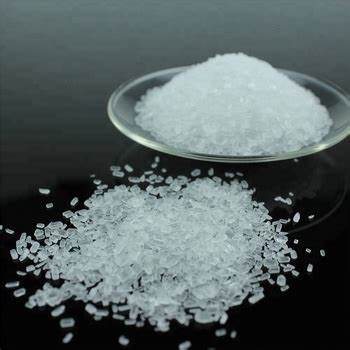
At room temperature, caustic soda (NaOH) is an odorless white crystalline solid that absorbs moisture from the air. It is a substance that is produced artificially. It can be said that it is a polyvalent alkali. This material is mainly used in the production of paper, soap and detergents, alumina, oil and chemicals. Some of the other uses of this material include textiles, food for water purification, mining glassmaking, metalworking, etc.
Practical applications of perk profit in energy
Sod perak has various uses such as cleaning, pesticides, detergents, soaps, mineral benefits in chemistry such as electricity generation, which is used in cells, which is used to produce soap, ray, paper, explosives, paint and products. Oil is used.
In the energy industry, caustic soda is used in the production of fuel cells. These fuel cells act like batteries to generate clean and efficient electricity for various applications such as transportation, material handling, portable emergency power, stationary and emergency applications. In addition, epoxy resins are made from caustic soda and are also used in wind turbines.
What happens if baking soda is mixed with bleach?
Bleach can be made by mixing caustic soda with chlorine gas, which has less residual caustic soda. Adding more bleach simply raises the pH level of the solution from +10.5 to +14.
For more information about caustic soda or baking soda, contact our experts.
Does soda perk absorb CO2?
There are two orthodox chemical processes for CO2 absorption. One of them is the use of NaOH (caustic soda) solution. Sodium hydroxide is an alkaline substance, and carbon dioxide is an acidic gas, and when these two substances react together, sodium carbonate is formed. The second method is to use calcium oxide.
Summary of the whole article:
Sodium hydroxide or caustic soda is used to produce various soaps and detergents that we use in homes and commercial applications. Chlorine bleach is composed of sodium hydroxide and chlorine. Drain cleaners that contain baking soda break down grease and oil that can clog pipes into a soap that dissolves in water.
Perak soda is used in various industries, including paper and paper pulp, drinking water, textiles, detergents and soap. World production of perc soda in 2004 was approximately 60 million tons, while demand was about 51 million tons. The chemical name of baking soda is sodium hydroxide and the chemical formula of baking soda is NaOH.