
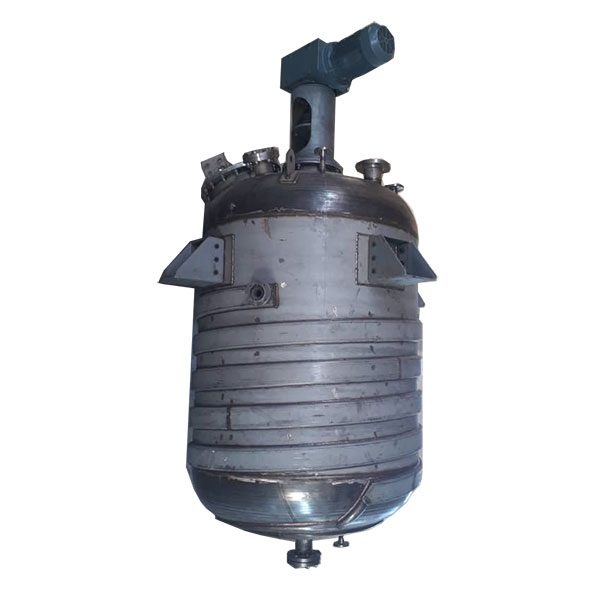
Chemical reactor
In this blog, we intend to provide information about the chemical reactor at your service, dear companions. Stay with us.
Reactors in which chemicals are made in industry vary from a few cubic centimeters to the vast structures often depicted in photographs of industrial plants. For example, kilns that produce lime from limestone may be more than 25 meters high and hold more than 400 tons of material at any one time. Chemical reactions are taking place. The two main types of reactors are called batch and continuous.
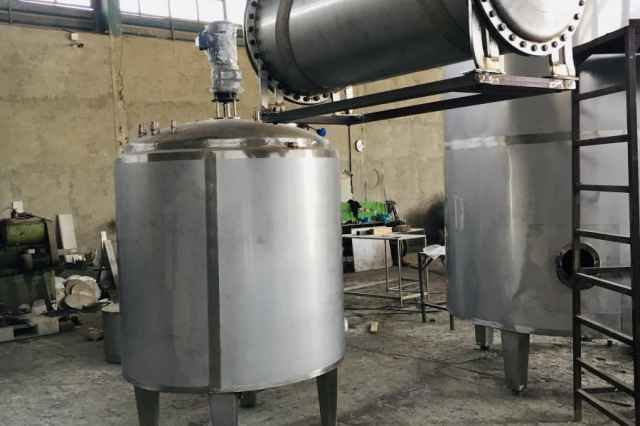
Batch reactors
Batch reactors are used for most reactions performed in the laboratory. The reactants are placed in a test tube, flask or beaker. They are mixed together, often heated to carry out the reaction and then cooled. Products are poured and purified if necessary.
This method is also done in industry, the main difference is in the size of the reactor and the amount of reactants.
Continuous reactors
An alternative to the batch process is to feed the reactants continuously into the reactor at one point, allow the reaction to proceed, and remove the products at another point. There must be the same flow rate of reactants and products. While continuous reactors are rarely used in the laboratory, water softening can be considered as an example of a continuous process. Hard water is passed from the mains through a tube containing ion exchange resin. The reaction takes place in the pipe and the soft water comes out at the outlet.
Continuous reactors are usually installed when large quantities of a chemical are to be produced. It is important that the reactor can operate for several months without shutdown.
The residence time in the reactor is controlled by the feed rate of the reactants to the reactor. For example, if a reactor has a volume of 20 cubic meters and the reactant feed rate is 40 cubic meters per hour, the residence time is 20 cubic meters / 40 cubic meters per hour 1 = 0.5 hours. Accurate control of reactant flow rate is simple. The volume is constant and therefore the residence time in the reactor is also well controlled.
This product has more consistent quality than a continuous reactor because reaction parameters (such as residence time, temperature, and pressure) are better controlled than in batch operations.
They also produce less waste and require much less storage of raw materials and products, resulting in more efficient operations. As a result, capital costs per ton of product produced are lower. The main disadvantage is their lack of flexibility because once a reactor is built it can only be used in rare cases to perform a different chemical reaction.
Types of continuous reactors
Industry uses several types of continuous reactors.
a) Tubular reactors
In a tubular reactor, fluids (gases and/or liquids) pass through it at high velocities. As the reactants flow, for example along a heated tube, they are converted to products (Figure 4). At these high velocities, the products are unable to diffuse back and there is little or no back mixing. The condition is referred to as plug flow. This reduces the occurrence of side reactions and increases the yield of the desired product.
With a constant flow rate, conditions at any point remain constant with time, and changes in reaction time are measured by position along the pipe.
The reaction rate is faster at the entrance of the tube because the concentration of the reactants is at its highest, and as the reactants flow through the tube due to the decrease in the concentration of the reactants, the reaction rate decreases.
Tubular reactors are used, for example, in the steam cracking of ethane, propane, butane, and naphtha to produce alkene.
(b) Fixed bed reactors
A heterogeneous catalyst is often used in industry where gases flow through a solid catalyst (often in the form of small pellets to increase surface area). It is often described as a fixed catalyst bed (Figure 5).
Examples of their use include the production of sulfuric acid (the contact process with vanadium (V) oxide as a catalyst), the production of nitric acid and the production of ammonia (the Haber process, with iron as a catalyst).
Another example of a fixed bed reactor is the catalytic reforming of naphtha to produce chain alkanes, cycloalkanes and aromatic hydrocarbons using platinum or a platinum-rhenium alloy on an alumina support.
c) Fluid bed reactors
A fluidized bed reactor is sometimes used, whereby the catalyst particles, which are very fine, are placed on a spreader plate. As the gaseous reactants pass through the distributor plate, the particles are carried along with the gases, forming a fluid (Figure 6). This ensures very good mixing of the reactants with the catalyst, with very high contact between the gas molecules and the catalyst, and good heat transfer. This results in a fast reaction and a uniform mixture, which reduces the variability of the process conditions.
One of the examples of the use of fluidized bed reactors in the oxychlorination of ethane to chloroethene (vinyl chloride), the primary polymer material is poly(chloroethene) (PVC). The catalyst is copper chloride (II) and potassium chloride deposited on the surface of alumina. This support is so fine that it acts like a fluid when gases pass through it.
last word
The Flicker Drum Collection has been producing Flicker Drums, Spray Dyes, Nickel Pans, etc. for many years, and in this way, it has built a brilliant history and is proud to cooperate with collections such as Sood Perak, Rasta Shimi, Eurasia Perak, Pakdane Mehr, Rose Perak Arax Shimi. , Parse has benefited from Alvand and so on.
We hope that you have found answers to all your questions in this blog. If you have more questions, you can contact our experts from the contact section of the site and get answers to your questions.
بدون دیدگاه