
Freezing process
In this blog, we are going to take a look at the freezing process and learn more about it. The freezing process, which is the conversion of molten materials into solids, is a chemical process that we will explain further. Stay with us.
Some are in the form of molten material in the process and are produced in this way. The final stage in the production lines of these materials is turning the melt into a solid. This process is used in different industries and is done in different ways.
for example :
Caustic soda is produced in the form of melt in chemical industries, which has a high percentage of purity.
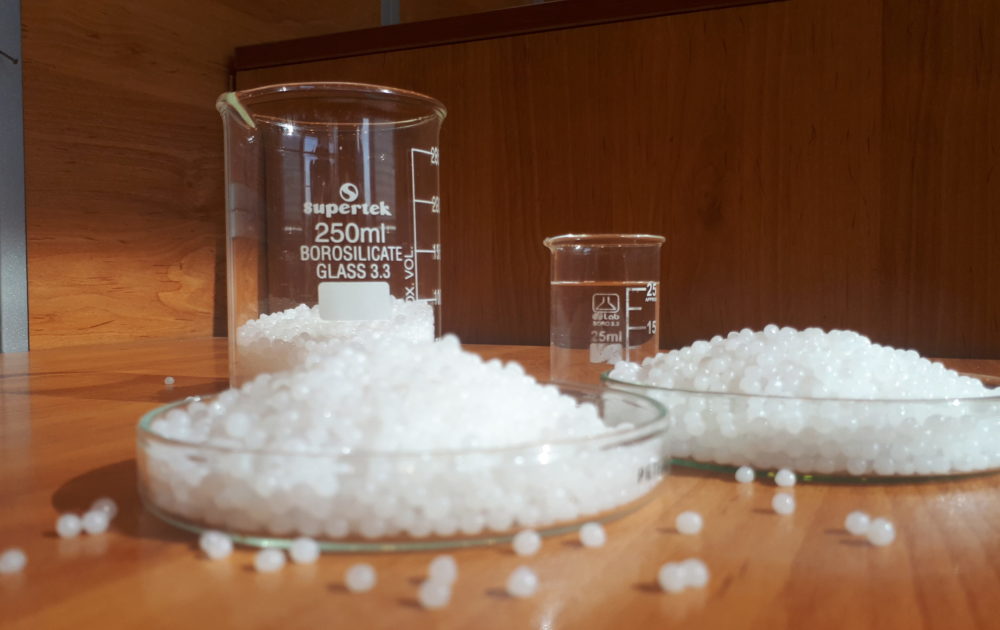
Hygienic wax is also produced in the form of a melt in the hygiene industry and takes a shape similar to solid lens granules at the end of the work.
All kinds of metals and polymers are produced in the form of melts in the petrochemical industry and finally become flakes or granules.
In all of them, the molten heat is absorbed and in the end they turn into solid particles, and in the same way, it is sold in the market according to its custom, and it does not matter in which industrial group the manufactured product is.
The goal of these efforts is to produce products in a way that can be easily packaged. It should also be easy for the consumer to use.
Devices and systems designed to freeze materials are listed for reasons.
Stay with us on the Drum Flaker website and at the end, if you don’t get the answers to your questions, you can contact our experts.
Types of solid particles
The following 5 methods can be used to convert molten materials into solids:
1- Pellet 2- Powder 3- Flakes 4- Granular powder 5- Regular shapes (molded)
pellet ( pellets ) :
When the molten material is solidified in a shape similar to small cylinders, they are called pellets. This chemical process is done by plotter or extruder machines. The diameter of the cylinders in this method is fixed and it can be said that their length can be changed to a certain extent.
powder ( powder ):
It is the most common form of solid matter in everyday life. Materials that have low intermolecular adhesion or solidify in the form of small individual crystals, after changing their state, become powder. If the powder consists of very small particles (similar to flour), it is called fine or soft powder. If the powder consists of tiny crystals, it is called sugar granule powder (like table salt).
granules ( granules ) :
Granules can be lenticular or spherical. Lentil granules are generally the same size. Spherical granules are slightly irregular. Converting the melt into lenticular granules is done by a belt or disk granulator.
The transformation of melt into spherical granules is done by pouring towers.
In a standard belt granulator, the size and shape of the lenses are the same and they can be resized to some extent.
flakes ( flakes ) :
Feathers are similar to fish scales (shredded scales). These particles in the smallest size are similar to coconut powder.
Melting into flakes is done by the flicker drum machine. In a standard flicker device, it is possible to control the thickness and size of the feathers.
Regular forms (templates):
In some cases, the melt inside the mold solidifies in a special way. This work is generally done in industries where the appearance of the product is important. (such as food-cosmetics-pharmaceutical industries) this work is done by mold freezing machines. What causes these devices to have a different structure from injection molds is that a mold freezing machine must produce thousands of identical solid pieces in a short time.
Introduction of material freezing equipment
1- Drum Flaker
Drum Flaker is used for perk production, it works based on a rotating cylinder.
Drum Flaker is a device that is used to convert molten materials into solid materials and even to dry solutions more easily.
This transformation is called solidification or crystallization, which takes place during a specific process.
The way it works is that molten materials or solutions are placed in contact with a rotating drum and according to the basis of the intended operation and how it works, it is cooled or heated by the internal fluid.
If this method is used to dry the desired product, the internal fluid will be hot, but if they want to convert the molten material into a solid, the internal fluid of the flicker drum is considered cold. Cold like water, glycone and…
As a result, during the rotation or flicker drum period, the desired material is separated from the surface of the drum by a blade or even with a knife made of cast iron, chrome-steel, beryllium copper, etc.
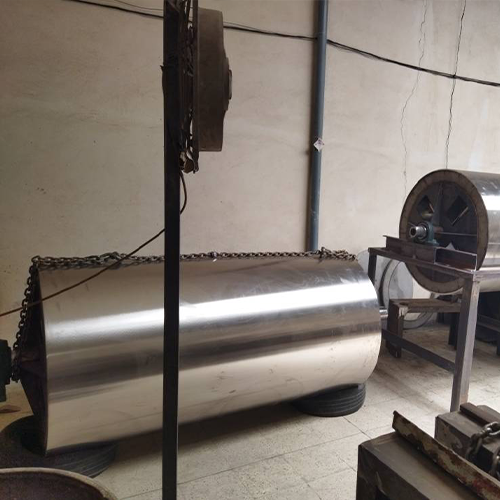
The size and shape of the product depends on things like the nature of the feed as well as the process conditions. It should also be mentioned that the size of the product can be controlled by controlling the thickness of the layer, the speed of rotation and the angle of the blade.
last word
The Drum Flaker Collection has been producing Flicker Drums, Spray Dyes, Nickel Pans, etc. for many years, and in this way, it has built a brilliant history and is proud to cooperate with collections such as Sood Perak, Rasta Shimi, Eurasia Perak, Pakdane Mehr, Rose Perak Arax Shimi. , Parse has benefited from Alvand and so on.
We hope that you have found answers to all your questions in this blog. If you have more questions, you can contact our experts from the contact section of the site and get answers to your questions.
بدون دیدگاه