industrial automation
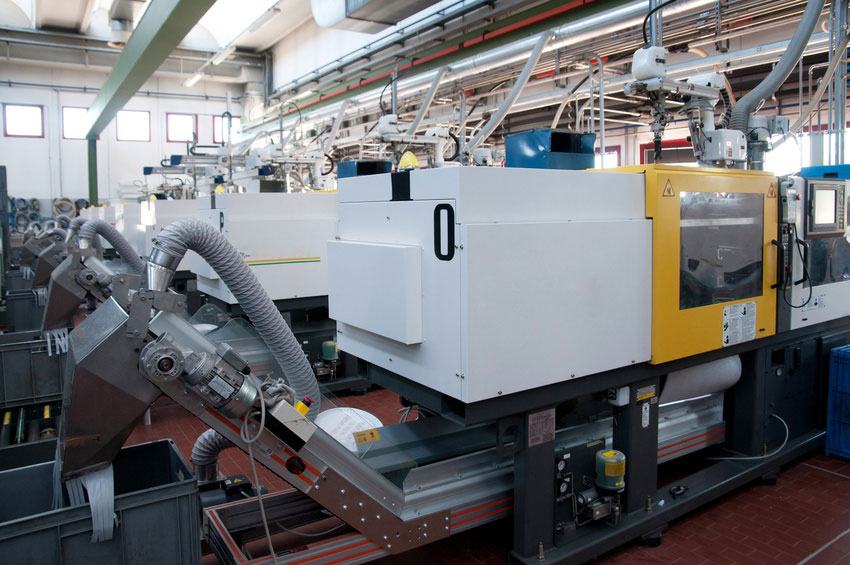
Industrial automation is the use of control systems such as computers or robots and information technology to manage various processes and machines in an industry to replace humans. This is the second step beyond mechanization in the field of industrialization.
Increase quality and flexibility in your production process
Previously, the goal of automation was to increase productivity (since automated systems could run 24 hours a day) and reduce costs associated with human operators (i.e., wages and benefits). However, today the focus of automation is on increasing quality and flexibility in the production process. In the automotive industry, piston installation in the engine was done manually with an error rate of 1-1.5%. Currently, this is done using automated machines with an error rate of 0.00001%.
Advantages of industrial automation
Lower operating cost: Industrial automation eliminates the health care and paid time off costs associated with the human operator. In addition, industrial automation does not require other employee benefits such as bonuses, pension coverage, etc. Most importantly, although it comes with a high initial cost, it saves the workers’ monthly wages, which results in significant cost savings for the company. Most importantly, although it comes with a high initial cost, it saves the workers’ monthly wages, which results in significant cost savings for the company. If it fails, only computer and maintenance engineers are required to repair it.
High productivity
Although many companies employ hundreds of production workers for up to three shifts to run the factory for maximum hours, the factory is still closed for maintenance and holidays. Industrial automation fulfills a company’s purpose by allowing a company to run a manufacturing plant 24 hours a day, 7 days a week, 365 days a year. This leads to a significant improvement in the productivity of the company.
High Quality
Automation reduces the error associated with a human. In addition, unlike humans, robots do not involve any fatigue, which leads to the production of products of uniform quality at different times.
High flexibility
Adding a new task to an assembly line requires training with a human operator, however, robots can be programmed to do anything. This makes the production process more flexible.
High accuracy of information
Adding automated data collection can allow you to capture key production information, improve data accuracy, and reduce data collection costs. It gives you the facts to make the right decisions about reducing waste and improving your processes.
High safety
Industrial automation can make the production line safer by using robots to manage dangerous situations.
Disadvantages of industrial automation
High initial cost
The initial investment associated with changing from a human production line to an automated production line is very high. Also, significant costs are required in training employees to work with this new complex equipment.
Result
Industrial automation has recently been welcomed by various industries due to its many benefits such as increased productivity, quality and safety at low costs.
last word
The Flicker Drum Collection has been producing Flicker Drums, Spray Dyes, Nickel Pans, etc. for many years, and in this way, it has built a brilliant history and is proud to cooperate with collections such as Sood Perak, Rasta Shimi, Eurasia Perak, Pakdane Mehr, Rose Perak Arax Shimi. , Parse has benefited from Alvand and so on.
We hope that you have found answers to all your questions in this blog. If you have more questions, you can contact our experts from the contact section of the site and get answers to your questions.
بدون دیدگاه