
interest perk
In this blog, we are going to provide information about the profit of Perk and its use in the industry, dear followers. We hope that the information will be useful.
- Familiarity with food
In chloralkali units, the salt water is decomposed in a membrane process in the electrolyzer. The goal is to produce hydrogen chloride. Soda solution with a concentration of 33% is produced as a by-product of the electrolyzer. According to the market custom and economic considerations, the soluble soda is concentrated in the same production unit and is offered to the market with a concentration of 50%.
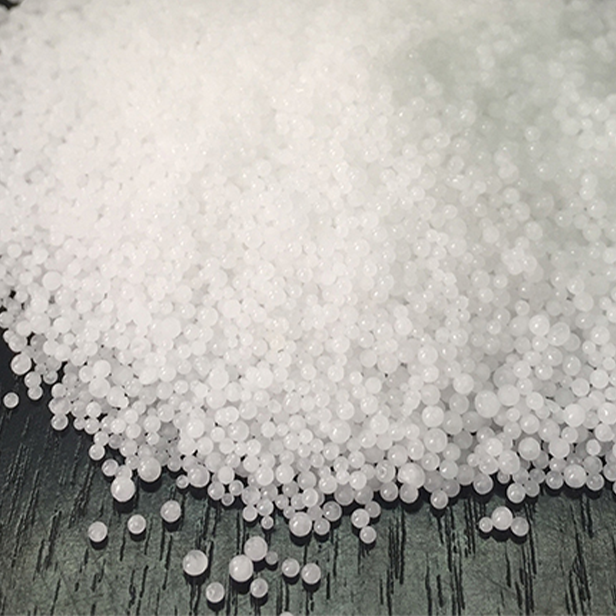
Due to the severe corrosiveness of the solution and the problems of storage and transportation of liquids, solidifying it in the form of flakes or granules is considered the best solution for transportation and storage and especially its export.
Although it is a simple evaporation process at a superficial glance, due to corrosion issues and high temperature of the process, soda solidification units are grouped at a high level in terms of technical knowledge and technology.
- Description of the process
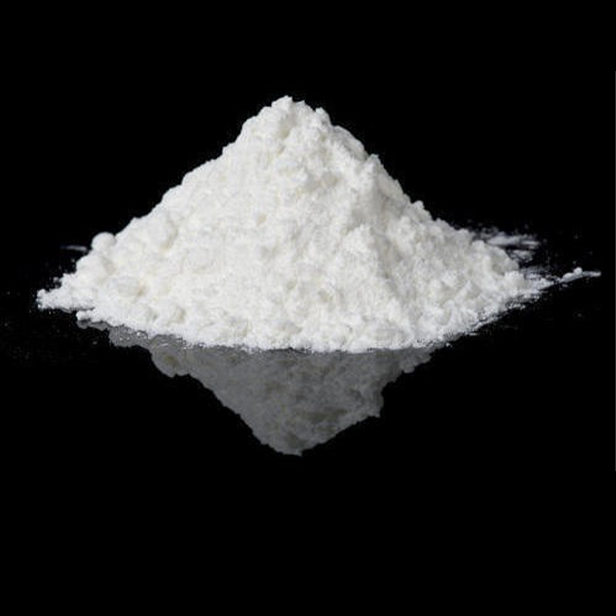
First, the feed (50% soluble sugar) is heated in a preheated exchanger to a temperature of 100°C by steam. After that, by adding the appropriate solution, chlorate ions (impurities present in the solution soda) which have many harmful effects are removed.
Profit goes into nickel double pipe evaporators. In these exchangers, during the process of falling film and by the heat of molten salt flowing in the shell, the soda water is evaporated and removed. The resulting steam is filtered and the last remaining particles of soda are separated from it so that no chemical pollution enters the environment.
On the other side of the converters, 98% of the profit comes out in a molten state, which is collected by a nickel channel and directed to the hydro drum. In the hydrodram, the melt flow and temperature are adjusted and sent to the Flicker drum device for freezing in the form of solid particles (flakes).
Flicker drum machine absorbs the heat of molten soda and transfers it to the cooling water. Solid soda is scraped from the surface of the drum by a blade. In this way, solid soda is produced in the form of crushed flakes in order to be packed in 25 kilo bags at the optimal temperature and in compliance with technical and safety issues.
(To learn more about the Flickr drum, refer to the page related to this equipment on this website.)
Molten salt is the energy carrier that transfers heat from the gas furnace to the falling film evaporator.
The material in contact with the profit is nickel. This precious metal is very sensitive to temperature changes and the presence of oxygen, so keeping oxygen away from it and controlling thermal stress are very important factors in the design and operation of equipment.
In the traditional methods where the dissolved soda evaporates in successive trays under the influence of direct flame, due to the presence of oxygen in the air and non-uniform heating of the sheet, the trays are quickly corroded. But in this method, using an energy-carrying fluid, the temperature of the process is accurately controlled and the heating of the nickel surface is done uniformly. Because the system is closed, the oxygen in the air does not reach the nickel parts. Therefore, the corrosion of nickel surfaces is almost zero.
Determining the optimal capacity:
If the soda solidification unit is defined as a subsidiary of an independent general alkaline unit, the capacity of the unit is equivalent to the capacity of producing soluble soda. But for a production unit that intends to supply food from the market – by truck – the capacity of 30 to 40 tons per day is an optimal economic capacity. Usually, the capacity of 20 tons per day is determined as the minimum economic capacity of this method.
List of main factory equipment:
- Feed storage tank (50% soluble soda) and soluble soda pump
- Nickel preheat exchanger
- Mixers for preparation of chlorate removal solution
- Falling film thickener
- hydroderm
- Flickr device
- Weighing and packing system
- Bag filling dust absorption tower
- Cooling water tower, cooling water pump and cooling water tank
- molten salt tank and molten salt pump
- Vertical furnace for heating molten salt
- Steam boiler
- Compressed air compressor and air care unit
- Nitrogen supply station with capsule charging
Uses of perk profit:
Perak profit is used in various industries, some of which are as follows:
Due to the great desire of this material to absorb water, it is used as an air dryer. (moisture absorption towers)
Due to the high affinity of this material, for the reaction and removal of pollutants such as hydrogen sulfide and…
From the combination of soda with various fats (animal and vegetable), soap base is produced, which is sold in the form of solid soap after purification and adding color and essential oil.
Due to its very alkaline nature, it is used to neutralize and adjust the acidity of materials.
It is used as a dye in textile and paper industries.
And…
Comparison of traditional method and molten salt method:
The two common methods that are used in Iran to convert soda ash into solid flakes are as follows:
- Molten salt cycle method (it is also called Bertramz or Elementi method)
which was explained in detail in the text of this article.
- The traditional method (it is also called the cascade or layered method)
In this method, several nickel trays are placed in a staggered form and the soda solution is continuously poured into the highest tray. The trays are heated from below with the direct flame of the torch. The soda solution passes through all the trays under the influence of weight and its water evaporates in this way. The resulting molten profit is directly entered into a flicker drum and is converted into perc.
In order to be able to make a proper comparison, it is necessary to know more about the behavior of gold (as a feed) and the behavior of nickel (as the main material for making equipment).
Investigating the behavior of caustic soda
Soda solution is a strong alkaline solution and very corrosive. At a temperature higher than 80 degrees Celsius, none of the stainless steel alloys can resist its corrosion. When we want to evaporate its water at a constant pressure (for example, atmospheric pressure) with heat, it is necessary to increase the temperature of the solution at the same time as the concentration increases.
Therefore, as the concentration increases, we need a higher temperature to continue the evaporation process.
To reach a purity above 98% at atmospheric pressure, the temperature of the solution should reach 380 degrees Celsius.
At this temperature, soda itself becomes molten. The only metal that can withstand corrosion at this temperature is high purity nickel.
Investigating the behavior of high purity nickel
Nickel is a soft metal that shows good resistance against a wide range of alkaline substances.
The best nickel alloys can withstand caustic soda up to 400 degrees Celsius. This resistance occurs in the absence of oxygen.
On the other hand, in the structure of nickel, the desire to absorb carbon is very high, and the structure of this metal is highly vulnerable to sulfur-containing compounds.
Therefore, if nickel is exposed to direct flame, it absorbs the carbon atoms in the combustion gases and becomes brittle. Due to the presence of sulphurous compounds in the flame, surface cracks are created and these cracks grow quickly in brittle metal. Therefore, nickel metal is not suitable for direct contact with combustion gases.
Technical comparison of methods:
Now that we are familiar with the behavior and properties of sodium and nickel, we will compare these two methods:
In the traditional (waterfall) method, nickel trays are in contact with combustion gases from below and with soda solution and air oxygen from above. It is obvious that in such unfavorable conditions – with increasing temperature – nickel corrosion increases exponentially. As the temperature increases (to achieve higher purity), corrosion increases. Therefore, in order to reach a purity above 95%, the trays are depreciated quickly. Another factor that makes the conditions very difficult for nickel is the non-uniform distribution of heat. Some points are heated in the form of a point and its temperature may reach about 600 degrees Celsius. Therefore, these points are destroyed and punctured more quickly.
For these reasons, this method is now completely obsolete in advanced countries and is being forgotten in Iran due to high depreciation and the production of low-purity profit (which no longer has a place in the market).
In the method of heating with molten salt, nickel tubes are uniformly heated by an intermediary fluid whose temperature is precisely controlled. Therefore, combustion gases do not come into contact with the metal surface. On the other hand, because the system is closed and the air is completely removed by nitrogen before the start, oxygen does not have access to nickel.
Obviously, in such conditions, nickel can perform its duty for consecutive years and its corrosion rate is much, much lower. In such a situation, the purity of the product can reach 99% without worrying about the equipment being corroded.
last word
The Drum Flaker Collection has been producing Flicker Drums, Spray Dyes, Nickel Pans, etc. for many years, and in this way, it has built a brilliant history and is proud to cooperate with collections such as Sood Perak, Rasta Shimi, Eurasia Perak, Pakdane Mehr, Rose Perak Arax Shimi. , Parse has benefited from Alvand and so on.
We hope that you have found answers to all your questions in this blog. If you have more questions, you can contact our experts from the contact section of the site and get answers to your questions.
بدون دیدگاه